Fostering – An Essay from a Foster Mom

s4002nsopopbwyr4I’ll be the first to admit that fostering is hard. In my experience, the first is super hard because you’re just figuring out how to love another being, but still let them go. That was Frisco, now Cody. Then I had Mickey. He was a little fussy and dad babysat most of the time i had him so it was easier.

Then came Ashton. Ashton was my potato. I loved that little guy with all of me. He needed me and I gave him all of me. It was one if the hardest things I’ve ever done.

Wade and Johnny came next. They were a different sort, I knew they would be adopted quickly so I was able to stay detached, but still care for them.

Jasper… He is quirky and a pain, in the best way. I missed him when I came home and didn’t see his head pop up in the window, but he was young and energetic and I have no doubt he will be cared for.

Now… Bandit and Rascal. I love them. I am connected to them and I think they love me, based on their wiggly butts when I come home. I am in love with Bandit and Rascal and if I didn’t have a rescue minded heart, I would keep them.

If I did that though, my heart and house would be above capacity. I wouldn’t be able to help anyone else.

The most important thing when fostering is knowing what is really best for them.

Maybe it is you and that’s awesome! Maybe you just think it’s you and if you really consider it, you’ll realize that even though you love this tiny being to infinity and beyond… you know there is someone else who could love them just as much as you do, while you keep room for the next pup who needs you.

Pet Friendly Recipes

Go-BananasGet in the kitchen and try making one of these delicious — and healthy — pet-friendly recipes, which are so much easier than you think to pull off. All of these treats are made from basic ingredients and come together in no time. From homemade chicken jerky to delicious dog biscuits, these are the perfect goodies to make for your favorite furry friend.

https://www.popsugar.com/pets/Pet-Friendly-Recipes-31915040?image_nid=31915040

6 All-Natural Ingredients To Help Calm An Anxious Dog

https://iheartdogs.com/6-all-natural-ingredients-to-help-calm-an-anxious-dog/

#1 – Valerian

Valerian is a sedative herb that relieves tension, anxiety, and over-excitability in dogs. Valerian can be bought dried or in capsule form and given to the dog orally, wrapped in a piece of cheese, or with a treat. Our favorite option for easy administration would be as a soft chew (Amazon link). Give it to the dog before situations that tend to cause anxiety and over-excitability in your dog.

#2 – Melatonin

Melatonin is a hormone that naturally rises in the bloodstream when animals sleep. Giving it to them when they are awake can help calm them down during stressful situations. It may be especially effective in dogs with separation anxiety issues, as its calming effects may last up to 8 hours. Be sure to read the ingredients before sharing your melatonin – it may contain Xylitol or other ingredients that are toxic for dogs.

#3 – Lavender (Scent)

You probably already know that the scent of lavender helps you to relax and fall asleep, but did you realize it can have the same calming effect on your dog? The scent of lavender actually reduces the body’s production of cortisol, the stress hormone, and it doesn’t have the same sedative effects of some of the other ingredients on this list. A drop or two of lavender oil in a place where your dog can’t ingest it will help relieve their anxiety.

#4 – Passionflower

Passionflower has been used since the mid 1500s as a sleep aid and sedative. Studies have shown that it can actually lower your brain activity and boost levels of GABA, a feel-good chemical. In humans, it’s been shown to be as effective as benzodiazepine medications such as Valium and Xanax in treating anxiety. It also has less of a sedative effect than other herbs. This can be a great option for highly anxious dogs. For easy administration, we like these soft chews that contain Passionflower.

#5 – Lemon Balm

A member of the mint family, lemon balm has been used since the Middle Ages to soothe nerves, relieve indigestion, and remedy insomnia. This sedative herb is effective in treating excitability and anxiety in dogs.

#6 – Chamomile

If you’ve ever suffered from insomnia, you’ve probably tried chamomile tea to help you sleep. Chamomile calms the nerves and induces sleep. It can also calm the stomach and ease digestive problems. You can give chamomile tea to your dog or soak a dog treat in the tea. Another option is a soft chew that contains chamomile.

All Natural Anxiety Relief

Did you know you can get several of these ingredients, plus a few more, in our Project Paws™ Advanced Calming soft chews on Amazon Prime? (also available in the iHeartDogs store here) They’re formulated to relieve your dog’s anxiety, nervousness, hyperactivity, tension, or stress related to traveling, thunderstorms, fireworks, vet visits, introducing new pets, or a change in their routine.

High-potency natural ingredients are properly formulated for optimal results, and dogs love the turkey flavored soft chew! It’s gentle enough to be used as a daily supplement and powerful enough to work as needed in stressful situations. And if that isn’t awesome enough, each purchase feeds 7 shelter dogs!

Why Do Poms Spin In Circles? | Pomeranian Information and Facts

via Why Do Poms Spin In Circles? | Pomeranian Information and Facts

PetPom’s GIANT Book of Pomeranian Care

via Pomeranian Book | The Incredible PetPom Book – Now in Print

The PetPom Book has been re-written and improved and is now PetPom’s GIANT Book of Pomeranian Care.

This 372-page, comprehensive book is the most helpful, detailed Pomeranian book that exists.

Available in print (via Amazon) here: PetPom’s GIANT Book of Pomeranian Care – Paperback $16.99 8.5×11″ 372 pages

And PDF ebook (formatted for your computer, tablet, or smartphone) here: PetPom’s GIANT Book of Pomeranian Care – PDF ebook $8.99

If you are looking for a book about Pomeranians that goes above and beyond, you’ve found it. This incredible 372-page tome dives into every aspect needed to raise a happy, self-confident, well-behaved, and healthy Pomeranian.

Each action you take, decision you make, and even the words you say have an impact on your Pomeranian. This book explores every relevant topic with an emphasis on concise information and practical advice that never leaves you wondering ‘what next?’ You’ll be armed with the knowledge you need for all elements affecting your Pom directly or indirectly through every phase of life; from puppyhood through adulthood and into the senior years.

Learn about the Pomeranian with size and structural variations, show vs. pet Poms, personality (and how your actions help shape it), color, intelligence, and more. If you’re just now bringing a Pom home, this book will guide you with introductions to home & family, how to handle nighttime crying, setting up your Pom’s area, early desensitization, and more.

 
This book is tailored to your Pomeranian; shy or hyper, clingy or a bit too independent, a dog that jumps up on visitors or hides behind furniture when the doorbell rings. Every behavioral quirk that may manifest (26 sections) is in this massive book, including a comprehensive section on separation anxiety to give your Pom the gift of self-confidence and security while you’re away from home.

The grooming chapter (10 sections) is extensive, with a schedule of tasks, a breakdown of each, step-by-step bathing, the importance of proper drying, brushing (puppy and adult), tangles, coat products, nail clipping (with photos), tear stains, and more. The coat is one of this breed’s most defining features; this Pomeranian book covers it all with puppy to adult coat transitions, trimmings, shedding, and fur loss issues with home remedies to help restore the coat.

The training sections are exceptional with step-by-step instructions to curb barking (every single barking scenario along with training for each), heeling alongside you, meet & greets with other dogs, nipping, humping, begging, over-zealous licking, command training, instilling proper hierarchy, socialization and desensitization, and much more.

Feeding & nutrition (10 sections) is explored in full, with advice vital to your Pomeranian’s short and long-term health, as well as female topics (including full pregnancy, whelping, and ‘breeding for color’ info), body part specific care, andhouse training (9 sections; ensuring fast success with no stone left unturned).

 
The Exercise & Activity chapter covers requirements, fun things to do, dog park safety, weather-related adjustments, and much more.

This book doesn’t slow down for a moment, with incredibly extensive health information (30+ sections) covering every issue the Pomeranian is prone to, conditions that affect toy breeds, and relevant issues seen with canines in general, including an outstanding allergy chapter. Never second-guess yourself, wondering what to do.

Included are the results of two puppy-growth studies of 249 Pom puppies that tracked first-year weights, comprehensive owner survey results exploring appearance, behavior, and health of 3,695 Pomeranians, statistics regarding life expectancy, and an entire chapter dedicated to keeping your Pom safe.

Throughout this book are sidebars, charts, beautiful photos (b&w in print, color in ebook), and supplemental aids.

Contributors include several top reputable AKC Pomeranian breeders and author and trainer Faye Dunningham who provides special-edition training sections.

We hope you’re excited to begin the journey of learning more about your Pom and providing the very best of care. Let’s get started!

Continue reading “PetPom’s GIANT Book of Pomeranian Care”

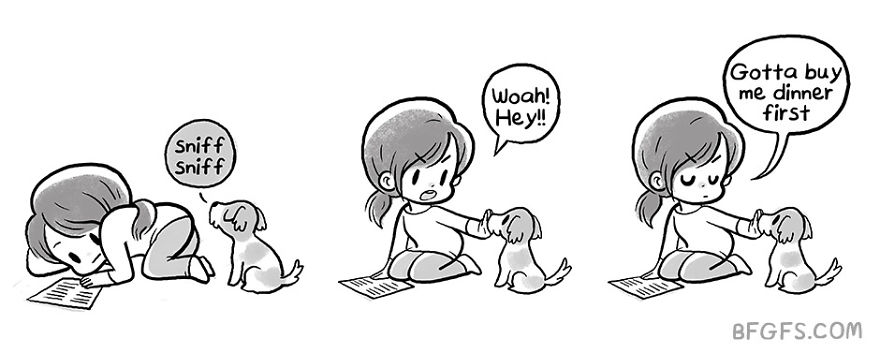
Girlfriend Illustrates Everyday Life With Her Boyfriend And A Puppy In 10+ Adorable Comics | Bored Panda

Cute-Couple-Comics-Bfgfs

via Girlfriend Illustrates Everyday Life With Her Boyfriend And A Puppy In 10+ Adorable Comics | Bored Panda

How to Tell If Your Dog Is Anxious or Stressed

Recognizing When Your Dog Is Stressed

A stressed-out dog will probably exhibit different body language than his chill peers. The whites of his eyes may be more pronounced. You may notice that he has an intense and direct stare or engages in hypervigilant scanning of the environment. He may avoid eye contact or frequently turn away from people or other canines. He may blink excessively — or not at all.

Your dog’s ears can also signal feelings of anxiety or stress. When your dog is alert or uneasy, his ears may becomes more erect. He may also move his ears back so that they lay close to or flat against his head. If your dog has floppy ears, it may be harder to distinguish this movement; watch for the base of his ears to rotate back and the ears themselves to move slightly back from their neutral position.

When your dog feels anxious, he may close his mouth tightly or pull his lips back in a tense grimace. This can be a sign that he is preparing to move into a growl, snarl, snap or bite. You may notice that the whiskers on his muzzle are erect and that the whisker beds appear more pronounced.

An anxious dog may also vocalize — he may bark, whimper, whine or growl, or make some other type of distress signal. Depending on the dog and the context, these vocalizations may indicate fear or aggression.

A stressed-out canine may stand in one place and lift a front paw or shift his weight away from whatever is scaring him. He may turn his head and body away or lower his body in a cowering, slinking movement.

You may see a change in his activity level as well. He may escalate and become hyperactive or appear more on edge and ready to react defensively. He may also freeze in place and refuse to move.

Other Ways Your Dog Experiences Stress

Like humans, canines experience physiological symptoms of stress. These may include respiratory changes, such as excessive panting, slow breathing or shallow breathing. Your dog may also hold his breath if he’s anxious.

Other signs to be aware of include excessive drooling or shedding, trembling, or sweaty paws. Your dog may also experience piloerection, which is when the hair on his neck, back or the base of his tail stands up; this can indicate high arousal.

An anxious dog may also urinate or defecate suddenly or break prior house-training habits. He may lose interest in food or become pickier about what he eats; he may also exhibit excessive thirst. He may spit out treats or grab them from you more aggressively than usual.

Your dog’s anxiety may manifest itself in some seemingly innocuous behaviors. He may shake (similar to how he shakes off after a bath) or yawn in an exaggerated manner. He may lick or scratch himself. He may roll onto his back and expose his bellyjump on people; or mouth, hump or mark objects. He may hug, lean on or cling to you, or try to climb up or hide behind you. He may suddenly demand more attention from you.

His general behavior may change, too. He may attempt to hide, look sleepy or depressed, or jump and startle easily. He may act goofy and hyper without proper context, or he may pace restlessly. He may fail to follow basic commands, like sit, and may lose interest in food, play and interactions with you.

If your dog exhibits ongoing signs of stress, make an appointment with your veterinarian. Once your dog has a clean bill of health, your veterinarian may refer you to a trainer or veterinary behaviorist to address both the fear and the behaviors it causes.

via How to Tell If Your Dog Is Anxious or Stressed

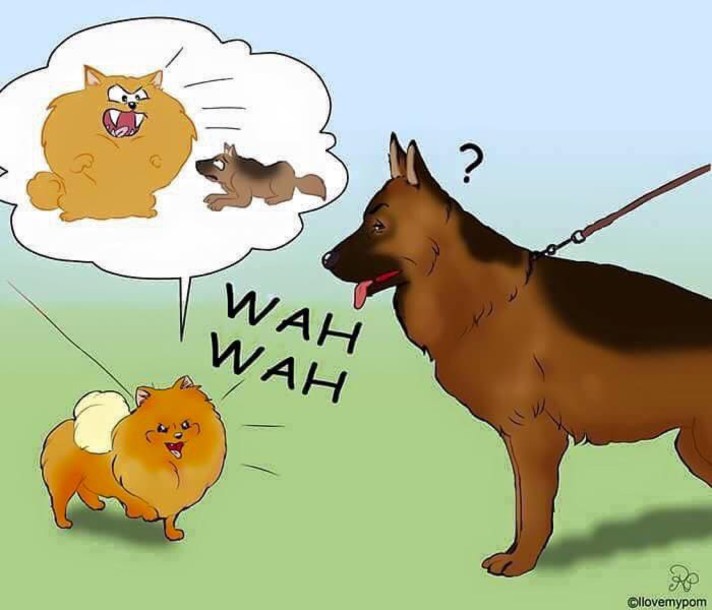
Think I’m a Big Dog!

Grapes in Science Diet Small/Toy Breed Food

“While grapes and raisins are not harmful to some dogs, they have been associated with kidney failure in others. Simply put, it’s not worth the risk to find out!

Vomiting, lethargy and diarrhea can occur within 12 hours of ingestion. If the symptoms are not treated, they can lead to dehydration, decreased appetite and increased urination followed by decreased urination. If your dog has consumed grapes or raisins and these signs occur, take her to a vet immediately. Your dog can develop long-term kidney disease or even die from kidney failure within three to four days.

Then guess what they have listed as an ingredient in their food? Dried grape pomace! :


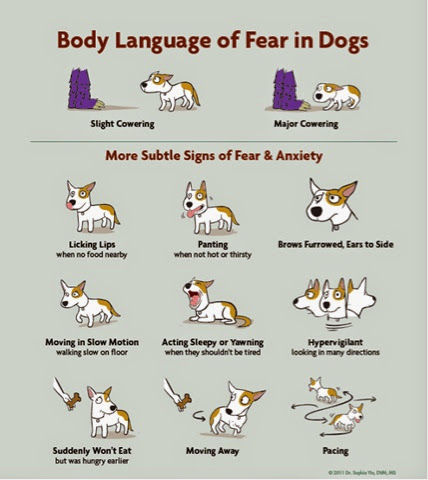
Body Language of Fear in Dogs


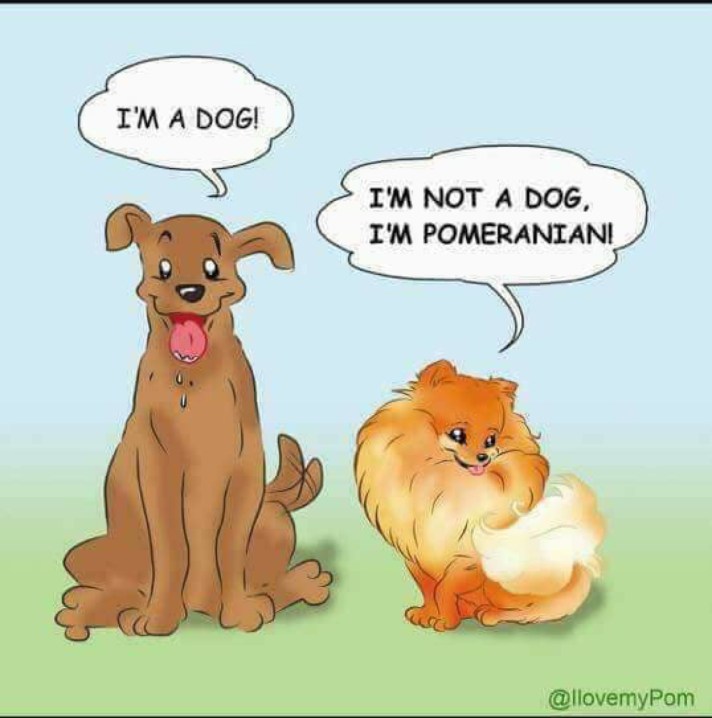
I’m not a dog

Animal Therapy and Services Explained

via Bipolar & Pets: Animal Therapy and Services Explained | bpHope

Service animals

These animals are mostly dogs and are trained to perform assistive tasks for people with physical disabilities. They are sometimes referred to as support animals or assistance animals, depending on the animal’s function. For a service dog to qualify, it must be individually trained to perform a specific major life task. “For a person to legally qualify to have a service dog, he/she must have a disability that substantially limits his/her ability to perform at least one major life task without assistance.” There are federal laws in the U.S. that protect you in allowing your service dog to accompany you anywhere you would normally go; this includes “no pet” housing and flying in the cabin of an aircraft with no fee for the dog. 

Psychiatric service dogs

Also falling under the category of “service animal,” these dogs are similar to service animals for people with physical limitations, but they are trained for people with a psychiatric disorder that is severe enough it limits their ability to complete a life task that is major in nature. Like service animals for physical limitations, there are laws that protect you in allowing your service dog to accompany you anywhere you would normally go. To legally qualify, a licensed mental health professional must state in writing that the service dog is needed by the person. 

Emotional support animals

An emotional support animal is an one that has been prescribed for a person by his/her licensed mental health professional because the person is deemed “emotionally or psychiatrically disabled” and the animal is needed for the person’s mental health. Sometimes referred to as comfort pets or companion animals, they can include: dogs, cats, birds, rabbits, mini-pigs, and many other specifies. These animals are not trained in specific tasks since it just their presence that helps the owner. 

Therapy animals

Therapy animals are usually dogs that have been obedience trained and screened for socialization and their ability to interact with other animals. Their primary function is to offer comfort to people in nursing/retirement homes, hospitals, schools, hospices and disaster areas. These animals can be classified into therapeutic visitation, animal-assisted therapy and facility therapy.

Circle of Trust T Shirt

https://www.sunfrog.com/Pomeranian-128025095-Navy-Blue-Ladies.html

Pomeranian