We have been accepted to the Paws for a Cause program at Dr. Fosters

Dog Supplies – Cat Supplies – Pet Blog
 Drs. Foster and Smith: Dog Supplies – Cat Supplies – Pet Blog |
We have been accepted to the Paws for a Cause program at Dr. Fosters
Dog Supplies – Cat Supplies – Pet Blog
Drs. Foster and Smith: Dog Supplies – Cat Supplies – Pet Blog |
via 3 Things All Pomeranian Owners Should Know – iHeartDogs.com
The Pom coat is high maintenance. Frequent brushing is required to prevent mats. Owners also need to watch for skin issues that hide under all that fur, such as hot spots or dry skin. Pomeranians are prone to flaky skin, so it’s something that needs to be monitored. They should not be shaved except for medical reasons, as the Pomeranian coat is designed to regulate body temperature.
While many Poms act like they are Great Danes, their tiny bodies are actually quite fragile. They are prone to issues such as luxating patellas and their tracheas are easily damaged. Jumping from the couch can cause broken limbs; jumping from your arms can be fatal. Harnesses are safer when walking than a collar. Owning a Pomeranian means taking extra care that he doesn’t get hurt.
Often described as having a Napoleon complex, Pomeranians can be very territorial. If they have not had training and proper socialization, your Pom will be a nuisance barker that feels it’s his duty to protect your home from anything that comes by, including the garbage man, friends, family or the neighbor’s cat.
via Giving This To Your Pomeranian Daily Could Help Alleviate Painful Skin Allergies – iHeartDogs.com
Allergies are a hypersensitive and damaging response of the immune system to external allergens, such as pollen and food. It’s the same for humans and dogs. However, with dogs the signs and symptoms may go unnoticed because our furry friends can’t tell us what’s wrong. So as the leader of the pack, we need to be hyperaware of what to look out for.
Fortunately, there are ways to help boost your dog’s immune system and decrease the effects of allergies. Omega fatty acids are a major benefit in the fight against allergies and degenerative disorders that can cause inflammation and arthritis. Some research has shown that Omega’s can even prevent allergies from developing in puppies. While every dog is different, there is no argument that your pup could benefit from Omega fatty acids. But here’s the catch…dogs can’t produce Omega’s on their own, so they must get them somewhere else.
There are many sources of essential Omega fatty acids. Some mistakenly believe that dog food delivers all your dog needs. Unfortunately, because Omega’s are susceptible to heat, most of the benefits become biologically unavailable to your dog due to the cooking/treatment temperatures of dog food.
That’s why I personally give my dog an Omega supplement. They really seem to like the Omega-3 Select chews from Project Paws. I like them because they’re made from anchovies and krill, which have some of the highest concentrations of Omega’s of any fish. Because these are small fish with a shorter lifespan, they don’t contain the high level of toxins like other large fish like Salmon. The other reason I love them is because each purchase of Omega-3 Select chews provides meals for up to 21 shelter dogs.
via 10 Signs Your Dog Has a Yeast Infection | petMD
Changes in color and texture
Signs of a yeast infection can vary depending on the site of the infection. “The biggest sign is alteration in the appearance of the skin,” Marrinan says. A pink or red color is commonly seen in the early stages of infection. With chronic infection, the skin can become leathery, thick, and gray or black. Remember that yeast infections can occur in a number of places on your dog’s body if conditions are right, he notes.
Greasy skin
Excessively oily or greasy skin is another common symptom of a yeast infection in dogs, according to Loft.
Scaly skin
Some dogs with yeast infections develop crusting, scaling, or flakiness of the skin that can look a little like dandruff, says Dr. Jennifer Coates, veterinary advisor for petMD.
Head shaking
“The ears are far and away the most common location for a yeast infection,” Marrinan says. In such cases, you likely will notice your dog trying to relieve his discomfort by repeatedly shaking or tilting his head.
Scratching and rubbing
Your dog also might be quite itchy from the yeast infection. You may see him scratching the affected spot, rubbing up against furniture or another surface, or scooting along the floor, Marrinan says.
Licking
Some dogs might attempt to relieve itchy discomfort by incessantly licking the infected area, the doctors note.
Swelling and warmth
While redness and itching are the first signs of a yeast infection, symptoms can easily progress to swelling, warmth, and pain in the infected area, according to Marrinan.
Odor
Odor also is a common sign of a yeast infection, regardless of location, Loft says. “Some people claim the yeast-infected skin and ears smell like Cheetos or have a sweet smell, but this is typically not a reliable ‘test,’ as we often find certain bacterial infections can have a similar odor,” he says. “It is important to remember this can be seen with other infectious organisms beyond yeast, so diagnostic testing at the veterinarian’s office is required.”
Hair loss
Hair loss can accompany the yeast infection and associated inflammation, Loft says.
Drooling
A yeast infection in a dog’s mouth is extremely rare but can cause abnormal drooling, oral discomfort, and problems eating. Excessive drooling can also be a sign of other problems in the mouth, such as an abscessed tooth or bee sting, Marrinan says, so pet parents should take their dog to the vet to determine the cause.
The most important aspect of treating a yeast infection in dogs is identifying and addressing the underlying cause. This will make the risk of relapse less of a concern, Loft and Marrinan agree. For deep and generalized skin and paw/claw bed infections, veterinarians may prescribe oral antifungal medications such as ketoconazole, fluconazole, or terbinafine, Loft says. Ears can be treated topically with appropriate ear cleaners and medications, but severe ear infections may also require oral medications. Bathing the skin and fur with disinfecting and degreasing shampoos can also help, Marrinan adds. The best treatment regimen can be determined by a veterinarian familiar with the specifics of the dog’s case.
via German Spitz and Pomeranian Project
 Pomeranian Project (formerly pomeranianproject.com) has reached its 10th year of providing you with as accurate and detailed an account of the history and development of the Pomeranian dog as possible.
Research will continue to carefully analyse original documents and other primary sources – so hopefully no ‘fake news’ here! In the near future some articles and information in both German and English will be added in order to better include our German speaking friends in this ongoing breed history project. Meanwhile please bear with us while some editing and re-arranging of format takes place.

Pop dog treats out and serve them to your pup! (Store in an air-tight container and keep in refrigerator.)
It improves overall skin and coat health (it moisturizes and reduces itchiness due to allergies or eczema), but it’s also been linked to preventing diabetes and heart disease.
*Start with about 1/4 dose of coconut oil and gradually increase over the course of several weeks so your pup can get acclimated if needed by decreasing coconut oil in recipe.
via Why Do Dogs Prefer Some Toys Over Others? – American Kennel Club
Generally speaking, most dogs like toys that simulate prey. This is why squeaky toys and soft toysare often very popular with most dogs. Hearing the high-pitched squeak and/or ripping apart a soft plush toy can be immensely satisfying to some dogs.
However, dogs are individuals, and even dogs within the same breed will have preferences due to personality differences. Some dogs prefer harder toys that feel good to chew on; others prefer toys like balls or Frisbees because they’re fun to chase and retrieve; and some dogs don’t like toys at all, unless their owner is in on the game.
Many people might think their dog has no interest in toys. It’s best to introduce toy play when your dog is young. Younger dogs and puppies are naturally more playful than older dogs. For puppies, younger dogs, or even less confident older dogs, you can try soft plush toys or even toys with real fur attached. Some dogs just need something totally new and different to entice them to play!
Your dog’s toy preferences can change throughout his or her life. Many puppies prefer rubbery-type chew toys while they’re teething, and senior dogs often like softer toys that are comfortable to hold and tug. During adulthood, your dog may need sturdier toys, such as thick ropes, or harder rubber balls.
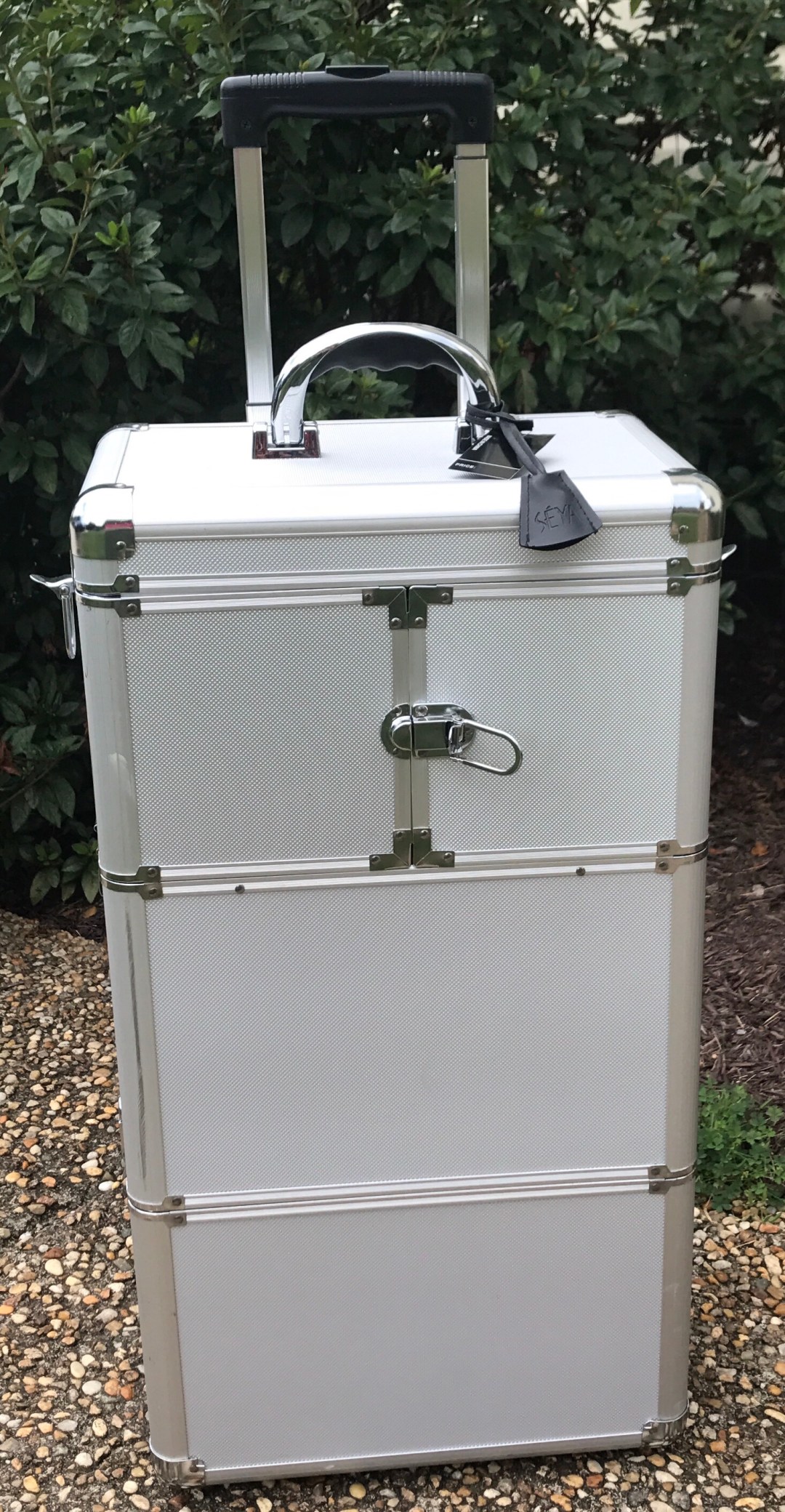
Deadline for purchasing tickets online in January 12, 2018
We are raffling off this large, portable grooming/make up case as a fundraiser to support club operations in the upcoming year. Operations include paying our insurance, caring for our rescues, maintaining our website…
Please let me know if you want to be entered in the 50/50 drawing, the Aluminum Case drawing or if you would like to split your tickets between the two! If you don’t tell me which, you will automatically be entered in the drawing for the case.
Click below to purchase your tickets via Paypal (there’s a penny on each of the links so it stands out on our Paypal account as a ticket sale $1.01, $5.01, etc…)
and if you’re really feeling lucky…