Tips for Removing Mats for Newbies

Image result for matted pomeranianPoms are notorious for getting mats under their arms and legs and behind their ears.  Sometimes it seems like they appear overnight and are the size of marbles before we know what hits us!

If you have looked online at all you have probably not just read, but been screamed at to not shave your pom, no matter what!!!  Well, while this is excellent advice as shaving can cause permanent damage to your Poms coat, it is not always reasonable.

If you are adopting Pom from a shelter or found a stray on the street, you may have no choice but to use clippers to remove excess mats.  Excessive matting can not only be painful to any dog, it can also cause serious health problems by cutting off circulation to limbs, forcing hair into the eyes, or preventing waste from falling free of the animal causing urine burns and infected anal glands.

This method is simple and I call it “dissecting the mat”.  It can help salvage the hair that may be able to be freed from the mat without causing much discomfort to your pet.

You can do on your own in between trips to the groomer, or if you elect to do your own grooming (only use sharp, hair cutting scissors):

  • Isolate the mat you are going to work on.  Try to move all lose hair away from it.
  • With your fingers, see if you can work any of hair free of the mat.
  • Open the scissors and slip one end under the mat at a 90 degree angle (Perpendicular) to the skin and cut through the mat.
  • Move the scissors so that you can cut a second time through the mat, crossing the first cut.  The mat should now be in about 4 sections.
  • You can keep cutting through the mat as much as you feel is needed to loosen it up.
  • Using a steel comb, gently try to work the mat free, one section at a time.  The most important thing to remember is that it can be quite painful if you are pulling the hair to tightly.  If possible, try to use your fingers to hold the fur between the skin and the mat firmly so when you are tugging the mat free, you are not tugging the skin.

Keep in mind that while this method of “dissecting the mat” may help free the majority of mats without resorting to cutting it out, you will come across those that you will need to just cut out for one reason or another, it could be too thick, too big, in too sensitive an area, or just for times sake, etc…

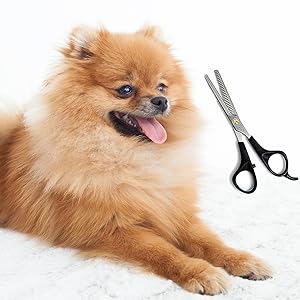
If you do need to cut a mat out, gently hold the mat taught, hold the scissors parallel to the skin and as close to the bottom of the mat as you can get, then gently snip away the mat being careful to avoid the skin.  You may want to try a pass with thinning shears to see if the mat pulls away with being completely severed.

The main thing to remember is to take your time, hair grows back if you cut it a little crooked, if you need someone to help keep your pom calm and distracted while you work, by all means do so and always follow up with love and treats!

My Dog Seems a Bit Stiff

Why Would You Stack My Toys?

26907741_1579254508862683_5506251571246168207_n

Why Are There Hold Deposits $

This is a little lengthy, but I hope it sheds some light on why we sometimes do things the way we do…

I recently was involved in a discussion where someone felt a puppy had been “sold out from under them” because they were still deciding.  While I primarily am only involved in rescue transactions which are a little more slow paced,  recently I helped a breeder by listing 8 of her retirees and “brokering” their adoptions to get her numbers down as she is overwhelmed.  This is based on my my experience:

my_pomeranian_stealing_my_cash_by_xxdelilahxxxcharmxx-d4dgcywIt gets very frustrating when you write out a detailed, yet concise description about a Pom only to be inundated with questions from a dozen or more people and only one or two of those people have questions that were not in your bio to begin with.  So now I am answering comments, some of them rather nasty, and in conversations with say half of the initial 12 that asked questions.
Of the 6 respondents I’m now in conversations with;

1 of them proceeds to tell me their life story and about every Pom they’ve ever owned, over the last 30 years,  but they aren’t ready for another one right now,

1 tells me how the Pom in the picture Iooks just like the one that died last year and spends an hour telling me about that Poms battle with cancer,

1 keeps me on the phone for a half an hour before she mentions that she is in California and asks if we deliver the dog from Virginia as part of the price;

We are now down to 3 interested families

Continue reading “Why Are There Hold Deposits $”

4 Surprisingly Durable Dog Toys

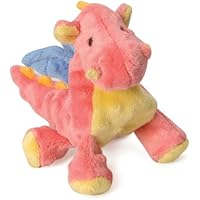
goDog Dragon With Chew Guard Technology Tough Plush Dog Toy, Coral, Small

via 4  S urprisingly Durable Dog Toys That Might Actually Survive The Grip Of Your Destructive Pup

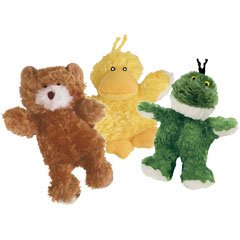
For our dogs, experience has shown us that GoDog Chew Guard and Kong Low Stuffing work the best!  GoDog’s are next to impossible for them to tear up even after multiple washing’s and the Kong’s have replaceable squeakers.  We keep both on our Amazon Wish List for our rescue.

Kong Low Stuffing with Squaker Dog Toy Size:XSmall Type:9 animals

//ws-na.amazon-adsystem.com/widgets/q?ServiceVersion=20070822&OneJS=1&Operation=GetAdHtml&MarketPlace=US&source=ac&ref=tf_til&ad_type=product_link&tracking_id=pomeranianclu-20&marketplace=amazon&region=US&placement=B00GOLQCX8&asins=B00GOLQCX8&linkId=d364931adb7306b01ec84f86b7b51db1&show_border=false&link_opens_in_new_window=false&price_color=333333&title_color=0066C0&bg_color=FFFFFF


National Dog Biscuit Day

National Dog Biscuit Day - February 23

All dog owners, remember that February 23rd National Dog Biscuit Day! This day is also observed around the world as International Dog Biscuit Appreciation Day.

Man’s best friend deserves a special treat, whether it is a reward for good behavior, as part of their training or just because we want to show our dogs how much we love them.

HOW TO OBSERVE

The following are a few homemade dog biscuit recipes you may want to make and give to your furry friends.

Peanut Butter and Pumpkin Dog Treats
Peanut Butter and Banana Dog Biscuits
Homemade Dog Treats
Diabetic Dog Treats
Bacon-Flavored Dog Biscuits

via NATIONAL DOG BISCUIT DAY – February 23 | National Day Calendar

Choosing a Harness and Collar for a Pomeranian

via Best Harness and Collars for a Pomeranian

1) The anatomy of a Pomeranian’s neck makes him vulnerable to injury. It is important to understand the anatomy of the neck area. Because, after all, that is where a collar sits.

 
A dog’s trachea (also known as windpipe) is the tube through which air passes in and out, and this is surrounded by rings of cartilage. 
 
Surrounding that are muscles. Small toy breeds like the Pomeranian do not have a lot of muscle built up around the neck and shoulders. 
 
In addition, the Pomeranian breed is prone to degenerative weakness of the tracheal rings.
 
These factors can result in a particular neck injury known as collapsed trachea. 
Collapsed trachea is a condition in which the tracheal rings collapsed inward. 
2) A collar increases the risk of injury. While collapsed trachea is mainly considered to be a genetic issue, and can happen regardless of whether you use a collar or harness, the use of a collar can increase the risk of this. 
 
This is because it may be triggered by an event such as a jerk to the neck area, or long-term pressure can cause a wearing down. 
 
Whether or not there is a genetic weakness, the rings surrounding the windpipe are prone to injury.
 
3) This injury can be devastating. When one or more of the rings breaks inward, this obstructs breathing and can cause a dog to endure dog quite a bit of pain. It can cause massive coughing fits that trigger additional damage to the area. There is often a characteristic honking cough, and internal swelling. 
 
Typically heavy doses of a variety of medications including anti-histamines, anti-inflammatory meds, and antibiotics are given to help control this. Part of the treatment is to immediately stop wearing a collar, and to switch to a harness. For severe cases, surgery will be needed to stabilize the windpipe. 
 
4) Even ‘innocent’ walking on leash and collar can cause issues. You may assume that if your Pom walks nicely beside you that there won’t be any problems. However, can you guarantee that there will never be any pressure on his neck with the use of a collar? 
 
Both acute events (lunging off to the side, the leash is stepped on and causes a quick jerk to the neck, etc.) and long-term events (years of pressure, strain, and tension on the neck due to pushing ahead while on leash, or for some tiny Poms, just the weight of the leash on the neck) are both areas of concern.