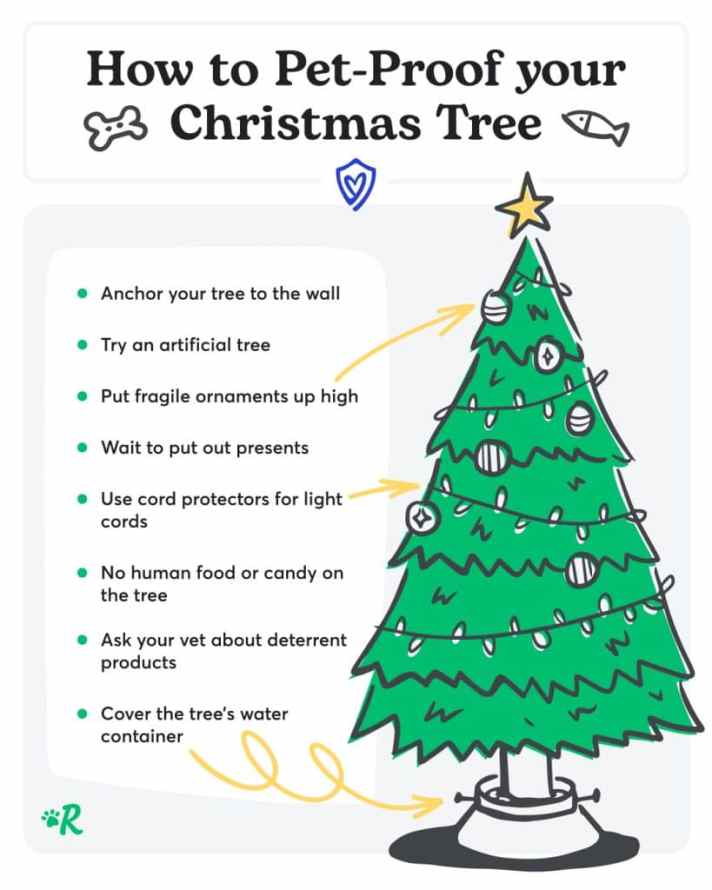
Nothing makes a cuter holiday picture than your dog posed in front of the Christmas tree. But dogs and Christmas trees aren’t always the perfect mix. Trees decorated with breakable ornaments and electric lights pose hazards to dogs, and curious dogs can be severely injured if they knock over the tree (not to mention your poor tree)!Don’t worry: you can still have a Christmas tree! You just need to take some precautions. Read on to learn how to keep your dog safe around the Christmas tree (and vice versa).
All members of the onion family are toxic to dogs—onions, garlic, shallots, scallions and chives.
All parts of the plant are toxic to dogs and cats, the leaves, juice and bulbs. All forms are toxic—raw cooked, dried or powdered. Dried and powdered onion and garlic appear in many prepared human foods. Read labels carefully before offering prepared human foods to dogs and cats as powdered onions are even more toxic than fresh.
Even if a food only contains a very small amount, toxicity can occur if eaten over a long period of time. Onions and their relatives are more toxic to cats than to dogs, so use these ingredients with care around cats and be especially careful when offering table foods to cats.
Plants in the onion family contain a toxin called N-propyl disulfide, which causes a breakdown of red blood cells, which leads to anemia. The toxin can damage red blood cells to the point where the body believes that they are invaders, causing the body to destroy its own red blood cells, which is a serious condition known as hemolytic anemia.
Signs of onion toxicity include weakness, decreased appetite, pale gums, fainting, reddish urine, vomiting, panting and an elevated heart rate.
Foods containing onion and garlic are often very attractive to pets. If you know your pet has consumed onions, they should be seen immediately.
Enjoy your onion rings on National Onion Day—just don’t share them with your pets!
Being a dog parent is a blessing. Most of the time, that is. But grooming, feeding, and walking your dog occasionally feels like having an extra job, and it can get overwhelming—unless you have the right tools and tricks to help you out in a tough spot. Incorporate these must-know tips into your pet care routine to master the art of mess management, claw scratch repair, canine nutrition, and all things dog parenting. These will make any fur baby parent’s life so much easier!
Picking the best indoor pet camera for you and your dog depends on how much you want to spend and what features you want, such as audio, night vision, recording and treat dispensers.
You can help raise money for causes and organizations you care about during Meta’s Giving Season.
Giving Season is a 6 week period where Meta may match eligible donations to eligible nonprofits on Facebook. Meta will match up to $7 million of eligible donations.
If you sign up to be a monthly donor to an eligible nonprofit on Facebook during Giving Season, then Meta may match a donation after the second donation made on that recurring agreement.