News

RIP Rosie

While Rosie was not a Pomeranian, her life this past year has brought to light the horrible conditions and dangers of backyard breeding.

Please look into rescue dogs before buying.  If you absolutely feel you must purchase a dog, then please look for reputable breeders.

http://www.dogster.com/the-scoop/backyard-dog-breeder-hoarding-rosie-chihuahua-has-died

http://www.dogster.com/the-scoop/rosie-chihuahua-backyard-breeder-update

Have a great weekend!

Uses of a Pomeranian

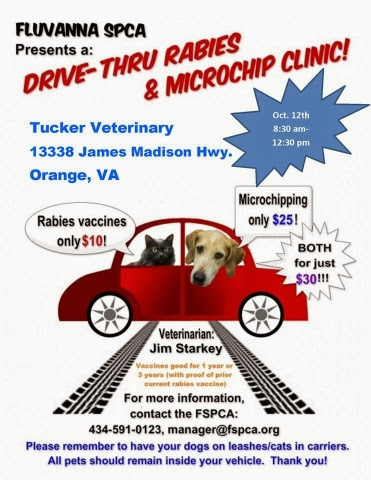
Drive thru Rabies and Microchip clinic on October 12

Canine CPR

What Should I Know About Pomeranian Dogs?

By Zoobia Ilyas, eHow Contributor

The American Kennel Club describes Pomeranian dogs as active toy dogs known for their compact stature, weighing between 4 to 6 lbs. Pomeranians have thick undercoats, covered with a shiny, straight outer coat that is often kept long. Highly alert, Pomeranians are curious dogs whose tails stand high. Pomeranians are an ideal breed whether they are kept as companion dogs or exhibited as show dogs.
Origin
According to the American Kennel Club, Pomeranian dogs came from Pomerania, a region that is now associated with both Germany and Poland. Historically, Pomeranians weighed up to 30 lbs. and were adept at herding sheep when full-sized. The breed became well known in 1870, when England’s Kennel Club identified it as the Spitz. The popularity of Pomeranians grew dramatically in 1888 when Queen Victoria adopted one while in Florence, Italy and brought it home to England as a pet.
Temperment
Pomeranians are known for their intelligence, outgoing personality and willingness to please. Proper training will encourage these characteristics, making Pomeranians excellent family pets. Because Pomeranians are small dogs, they do not need vigorous exercise. However, Pomeranians are energetic dogs, demanding the undivided attention of their masters at all times.
Health Problems
Typically, Pomeranians live long and healthy lives. However, some health issues can arise in some Pomeranians that can limit the breed’s lifespan. For example, a Pomeranian’s teeth require regular cleaning. Neglecting a Pomeranian’s teeth can cause them to fall out prematurely. Additionally, since Pomeranians are classified as a toy breed, they suffer health problems germane to smaller dogs. Luxating patellas and a collapsed trachea are two common problems in toy breeds. Pomeranians can also experience hypothyroidism. A reputable breeder will examine stock for prevalence of hereditary conditions and will only breed them when healthy and disease-free.
Training

Because of their willingness to please, Pomeranians respond well to obedience training. Incredibly devoted, Pomeranians make excellent watch dogs committed to defending their owners and families. Pomeranians are also known to possess the attitude of much larger dogs, approaching canines without fear. Because they are easily trained, Pomeranians are employed as therapy dogs and hearing assistance dogs. They also perform well in search and rescue scenarios. Due to their small size, Pomeranians can assist law enforcement and search parties by reaching areas that are too small to accommodate people.

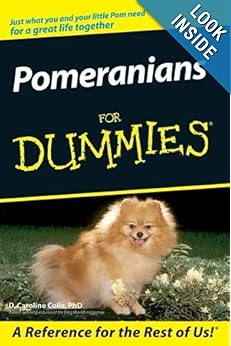
Pomeranian’s for Dummies


Use this link and a portion of the proceeds will be donated to Rescue Pomeranians:  

Pomeranians for Dummies on Amazon

It’s easy to see why you fell in love with the idea of adopting a Pomeranian. Distinguished by its vivacity, intelligence, extroversion, and fierce loyalty to its family, this tiny canine can make an excellent companion…for the right person. As with any breed, or dogs in general for that matter, it’s important for you to know what to expect when you take a Pom into your life.

Whether you’re a new or an aspiring Pom owner, Pomeranians For Dummies fills you in on everything you need to know to find, choose, raise, care for, and have a ball with a member of that outstanding breed of dog. From finding your canine soul mate to breeding Pomeranians for show or companionship, award-winning dog author and renowned dog psychologist, Dr. Caroline Coile covers all the bases, including how to:
  • Decide whether the Pom is right for you
  • Find a good Pom breeder
  • Select the perfect Pom for you
  • Make sense of your Pom’s behavior
  • Train your Pom
  • Keep your Pom happy, healthy and well-groomed
  • Know what common health problems to look for
  • Take your Pom on the road
Illustrated with dozens of heart-melting photos of Poms in-action, Pomeranians For Dummieshelps you to guarantee that you and your little buddy have a long, happy life together.

Reserve a Page in our 2014 Calendar – Don’t Delay, Reserve Today!

***Members***

For $20, you select the month you would like and post the pictures you wish.  Showcase your champions, favorite “pet” photos, have a theme (Margaret is posting all her reds in February), etc…

To reserve your page, submit the below form before September 23!!

There are only 12 months in a year so supply is limited!

Hidden Rock Match Candid Photos

Thanks to everyone that came out today.

You may recognize our past rescue, Bella.

As you can see, she is still a little skittish about hardwood floors, but her inner Ms. Piggy wins!

https://www.facebook.com/video/embed?video_id=719710701388636

*ADOPTED* DOLLAR – Our sweet rescue boy looking for a family. Likes kids, cats,dogs, people….

To see more pictures of me, visit the
Pomeranian Club of Central Virginia Facebook page


 To submit an application to adopt Dollar, 
CLICK HERE

I can’t say enough about how sweet and loving he is!  He is super gentle even when taking treats from your hand.  I think he is the quietest, most outgoing and gentle Pom I have ever had in my home, even more than my own dogs.  He would make an excellent therapy dog.
Dollar is estimated to be about 5 years old. He is in excellent health and our vet thought he was half that age. He is on the large side, at 13 pounds, but has a beautiful red coat and a “foxy” face. He came to us with a version of a lion cut, but it is growing out, so don’t hold that against him.
We picked him up on September 9 as an owner surrender and he’s been in our home since.  The family he came from decided that the kids were older and they no longer wanted a dog. 
He is definitely a people person. When I let all the dogs out for a potty break (3 Poms and a MinPin/Chi), when they come back in, everyone tears right past me, except Dollar.  Dollar always stops, stands up and says “Hi” before he follows the others.
When we took him to the farmers market he had to say hi to every dog and half the people he saw.  If someone was sitting down, he stood up and nuzzled them to get pats.

Our home is not extremely active. He has been content playing fetch with in the house, but for the long term, I think he needs more activity. I think he would do very well with a family with kids to play with or a couple that likes take walks. I think he’d be okay with every other day walks/exercise and on the off days a little indoor playtime should be ample for his exercise needs.
He will give kisses, but you have to ask and he only gives one or two.  He shows affection by leaning in to you or nestling his head almost under you then sinking down for a snuggle.  He does not lick very much (which my husband and I consider a plus). 
He is also very quiet. He barks briefly when we come home or when the doorbell rings (and of course when the mailman drops the mail in the box). We live on a busy street and he doesn’t bark at the outside world.
We are gone to work for about 9.5 hours and have left him lose in the house with our 3 dogs. He has not had a problem holding it most of the time. We do keep a washable puppy pad out for emergencies.
He has been neutered, had a dental (no missing teeth, they are gorgeous!), a checkup (he is heartworm negative) and all his shots updated.  His adoption fee is $250.00

Pomeranian Puppy is suspicious of broccoli

Register Now for our Annual AKC Approved "B" Match and Picnic – Everyone is Welcome


Come and join the Pomeranian Club of Central Virginia as we host our annual informal match and potluck picnic!

Whether you want to gain experience, show off your little one, learn about the breed or meet an adoptable Pom, we encourage you to join us on September 15 at Hidden Rock Park in Goochland County.

Pre-registration is preferred, but not required.  


Standard Pomeranian Breed

By Julia Drake, eHow Contributor
Pomeranians are a dog breed that descends from larger Spitz breeds. They are common in competitive dog shows and as companionable pets. The American Kennel Club (AKC) classifies the Pomeranian as a Toy dog weighing between 3 and 7 pounds. Smaller Teacup versions of Pomeranians exist, but the Toy breed is the standard or ideal size for this dog breed. Specific physical and behavioral characteristics define the Pomeranian breed.
Appearance
o       The AKC says that competitive show Pomeranians should ideally weigh between 4 and 6 pounds. Pomeranians have slightly rounded heads with fox-like expressions. Their ears are small and erect and their eyes are dark and almond-shaped. A Pomeranian has a double coat that contains a soft, thick and fluffy undercoat covered by a long, straight and harsh topcoat. The breed standard for Pomeranians includes all different coat colors and patterns. Pomeranians can be any solid color, any color with lighter or darker shading, black and tan or white with colored patches. They can also have brindle coats of red, orange or gold coloring with black cross stripes.
Temperament
o       The standard temperament for Pomeranians is an outgoing, lively and happy-go-lucky disposition. The dog is inquisitive, intelligent and extroverted. Pomeranians can be very protective of their families and make good family watchdogs. The dogs can be bold, willful and slightly sharp-tempered. They may become too demanding with their owners if they are not taught obedience training. Known for being affectionate and friendly animals, Pomeranians can work as therapy dogs. Their quick, alert personalities also make them well-suited as service dogs.

Living with Pomeranians

o       Pomeranians are delicate dogs and are not suited for families with very young children. Children can accidentally injure or kill Pomeranian puppies by dropping or vigorously squeezing them. Pomeranians are generally not afraid of larger dogs, and owners must take care to prevent larger dogs from injuring smaller ones. A properly socialized Pomeranian can get along with other household pets. Pomeranians can live in limited-size environments, such as apartments or townhouses. They need human company and will be unhappy if left alone for hours at a time.
Health
o       Although generally healthy, resilient dogs, Pomeranians are susceptible to certain health problems. The dogs can suffer from a knee-joint problem known as patellar luxation and may require surgery in severe cases. They are also prone to dental problems. You can prevent infected gums and rotten teeth by brushing your dog’s teeth daily with a toothbrush and canine toothpaste. Pomeranians can suffer from coughing attacks and should not live in dusty or smoky environments that make it difficult to breathe. Regular exercises, such as walks or play sessions, are important to a Pomeranian’s mental and physical health. To prevent tangles and mats in its fur, a Pomeranian needs to be brushed every day.